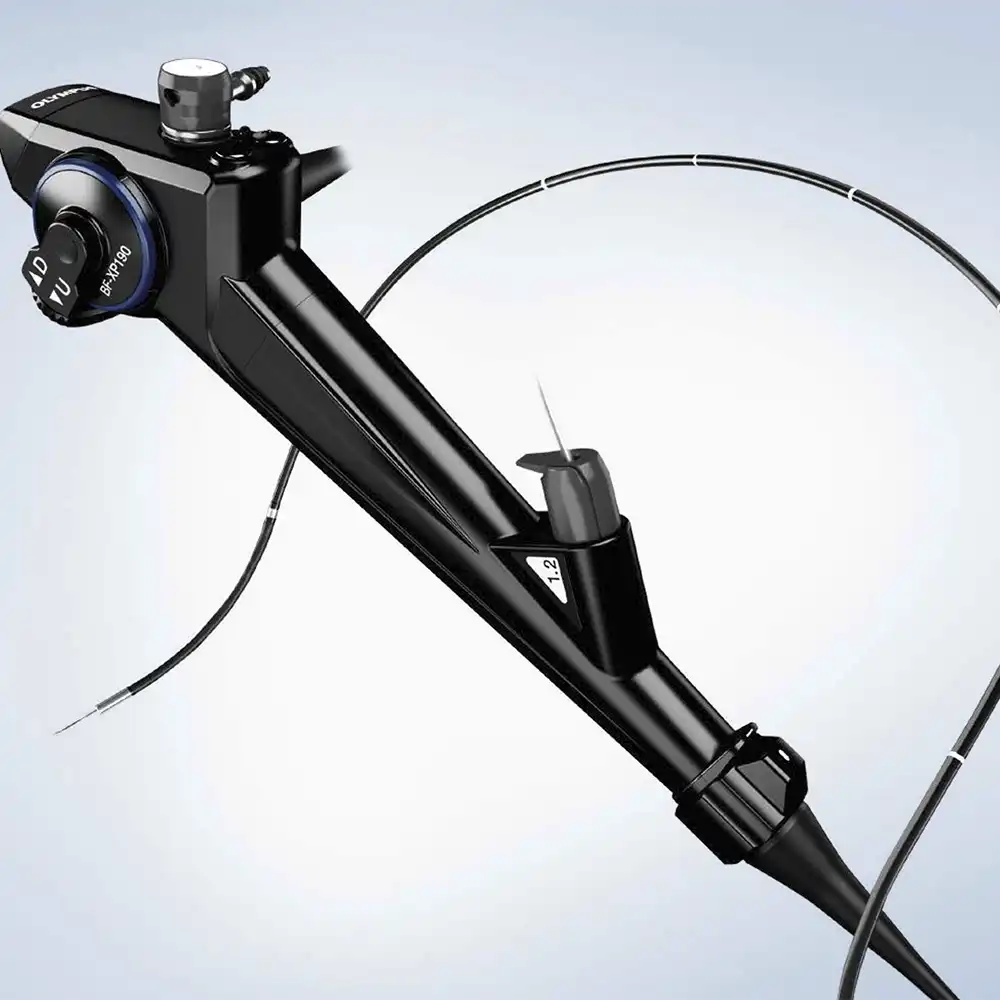
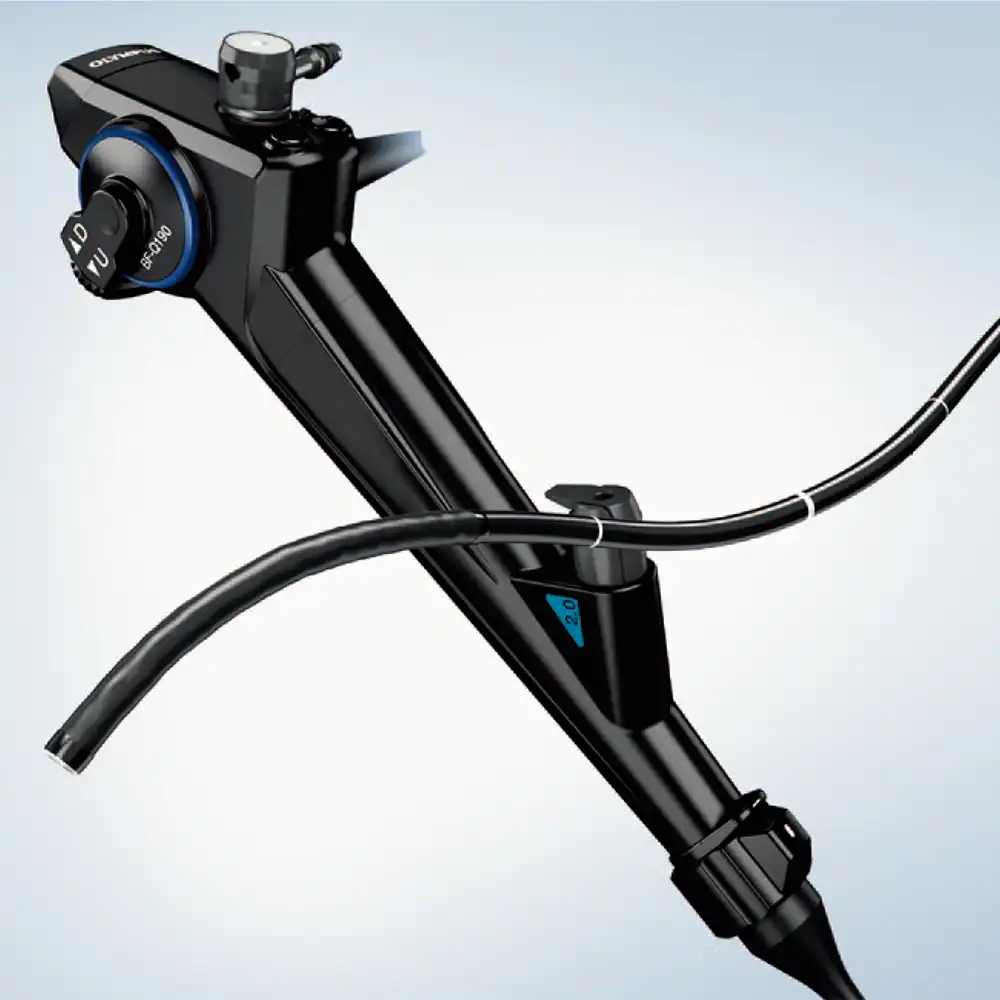
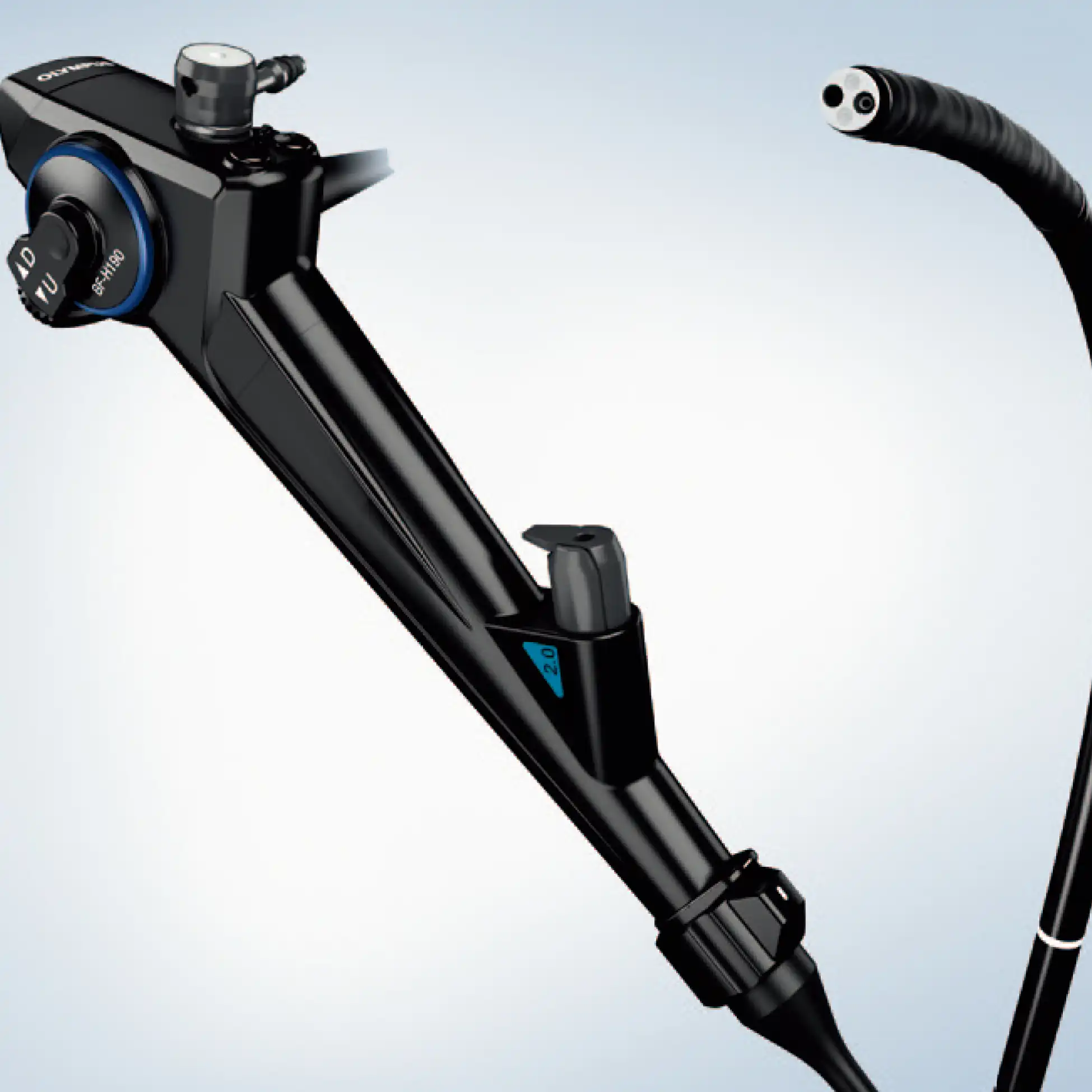
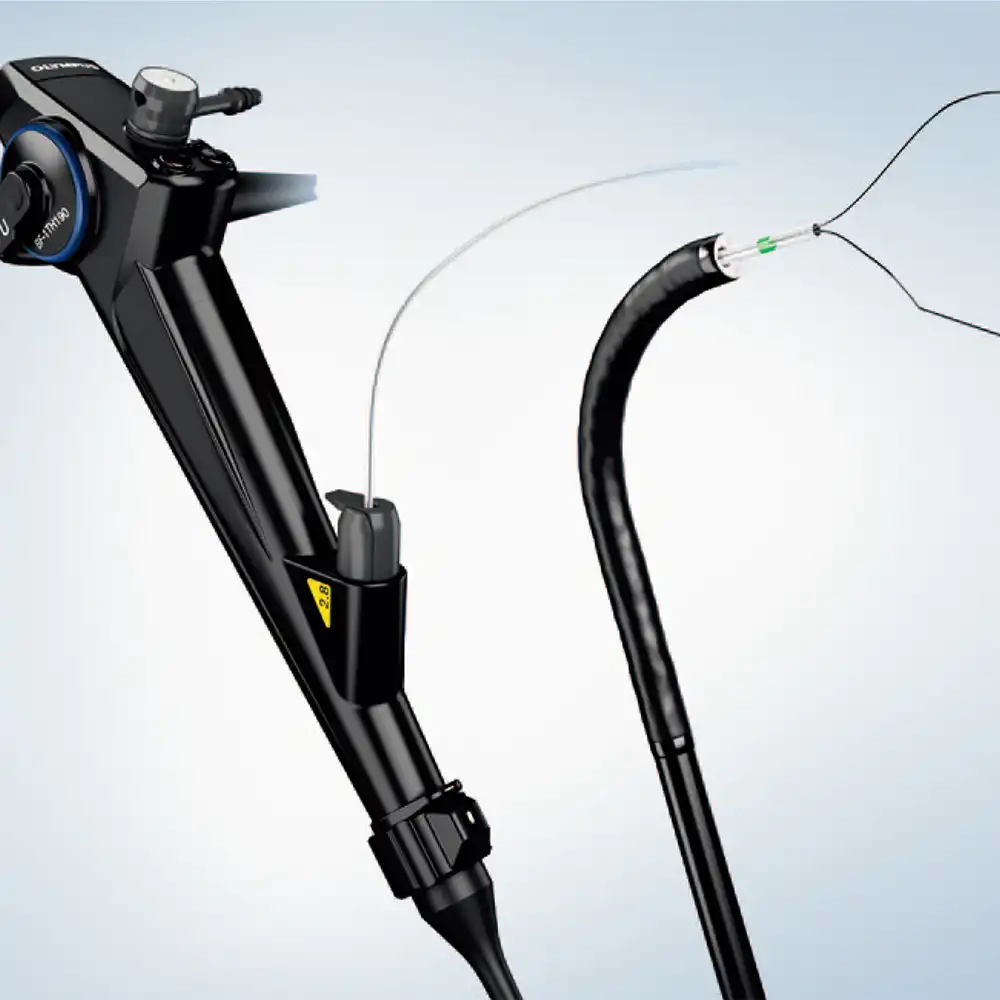
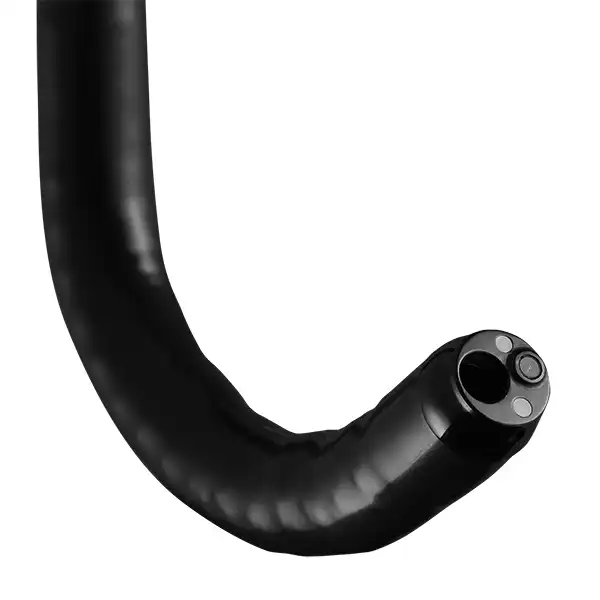
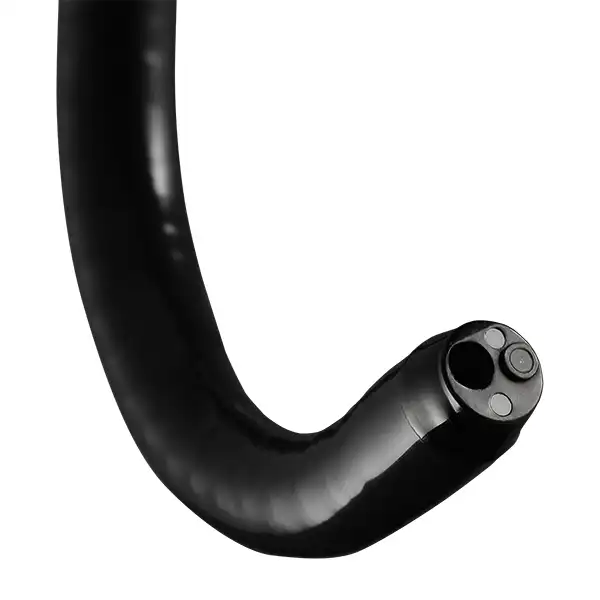
EVIS X1 BF-1TH1100 Therapeutic Video Bronchoscope
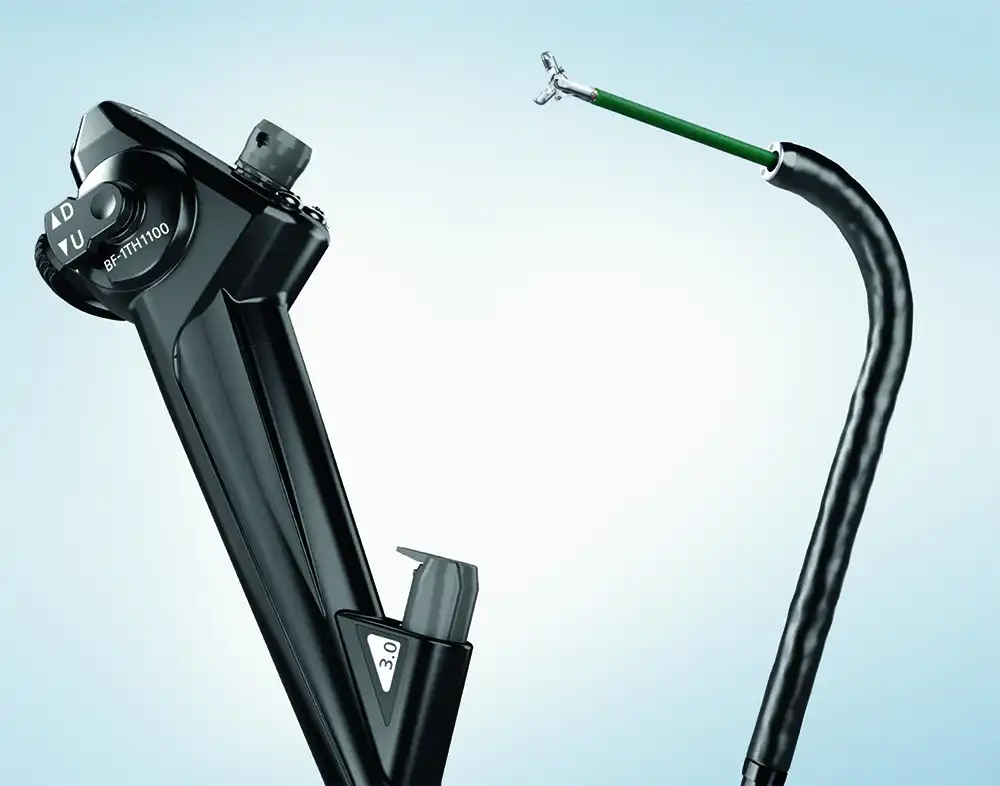
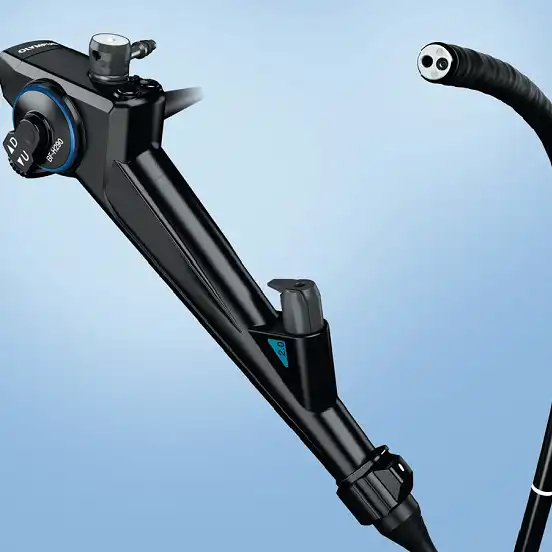
5.8 mm Diameter with HDTV Image Quality
The distal end diameter of the BF-1TH1100 bronchovideoscope has been reduced from the 6.2 mm of its predecessor1 to 5.8 mm without compromising the native HTDV image quality.
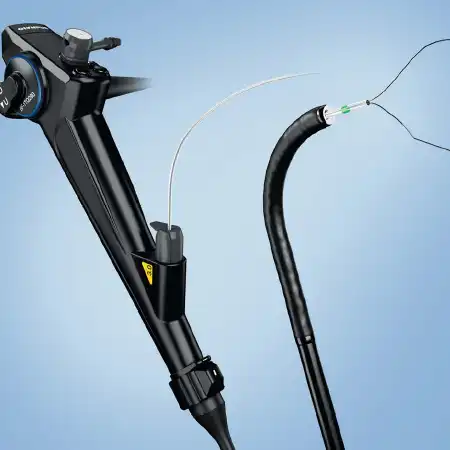
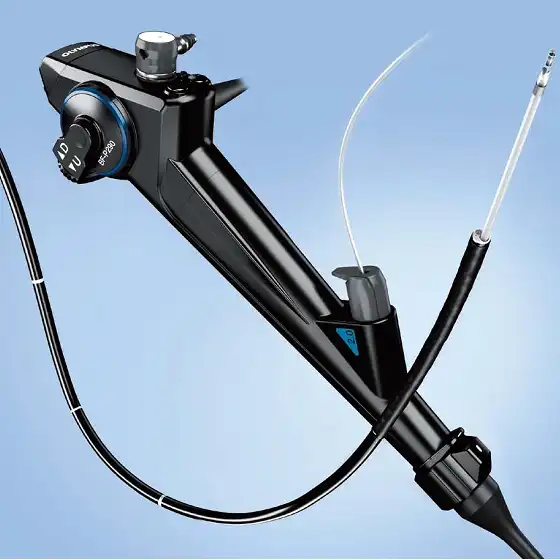
3.0 mm Therapeutic Instrument Channel
The large 3.0 mm instrument channel facilitates the use of a broad selection of EndoTherapy devices while providing stronger suction performance compared to the 2.8 mm instrument channel diameter of the predecessor.1
Excellence in Ease of Use
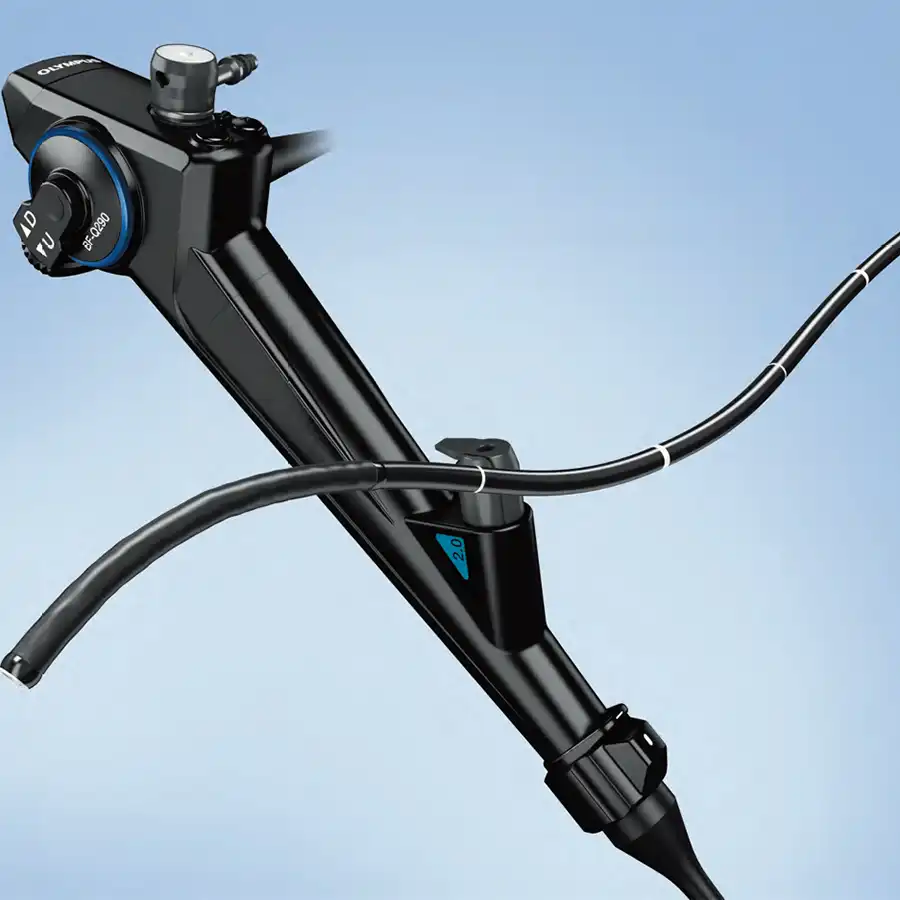
Based on technologies which made its predecessor a highly valued tool in bronchoscopy, the BF-1TH1100 features a rotatable insertion tube that turns 120° in either direction for easier targeting and delivery or withdrawal of EndoTherapy devices.1 A waterproof one touch connector enables quicker connection of the endoscope to the system.
Observation Modes
TXI (TeXture and color enhancement Imaging)2
Delivering a new ease and clarity of observation by utilizing brightness, tissue texture and color differentiation. Bronchoscopy is enhanced by a combination of brightness correction of the dark image areas and an accentuation of the observed tissue texture.
NBI (Narrow Band Imaging)3
The proven imaging technology helps physicians to inspect suspicious lesions. During endoscopic observation, NBI enhances the visualization of the capillary network and mucosal morphology.
RDI (Red Dichromatic Imaging)2
Enhances the visualization of vessels in deeper layers of the mucosa. By using narrow bands of the red part of the light spectrum (long wavelength bands of 600 nm and 630 nm) which penetrate deeper into the mucosa, deep vessels can be displayed in stronger contrast and hence are better visualized.
1 Olympus EVIS EXERA III BF-1TH190 bronchovideoscope
2 Requires EVIS X1 CV-1500 video system center
3 Requires EVIS X1 CV-1500, CV-190 or CV-190 Plus video system center
| |
BF-1TH1100
|
| Optical System |
Field of view |
120°
|
| Direction of view |
Forward viewing |
| Depth of field |
3-100 mm
|
| Insertion Section |
Distal end outer diameter |
5.8mm
|
| Insertion tube outer diameter |
6.1mm
|
| Working length |
600 mm
|
| Instrument Channel |
Channel inner diameter |
3.0 mm
|
| Minimum visible distance*1 |
3 mm from the distal end |
| Bending Section |
Angulation range |
Up 180° / Down 130° |
Compatible
System |
Video system center OLYMPUS CV-1500
Video system center OLYMPUS CV-190/CV-190 Plus
Xenon light source OLYMPUS CLV-190 |
*1 Distance from the distal end of the endoscope.



 Microsystem
 Endoscopysystem
 Energysystem
 EndoscopyConsumables
 +86-21-54286005
 Room 602, Building 1, No. 111 Luxiang Road (Greenland Park Plaza), Baoshan District, Shanghai, China
  English
 中文
中文
 BF-1TH1100_Brochure_EN


 中文
中文 English
 Chrome
 Edge
Edge
 Firefox
 Safari